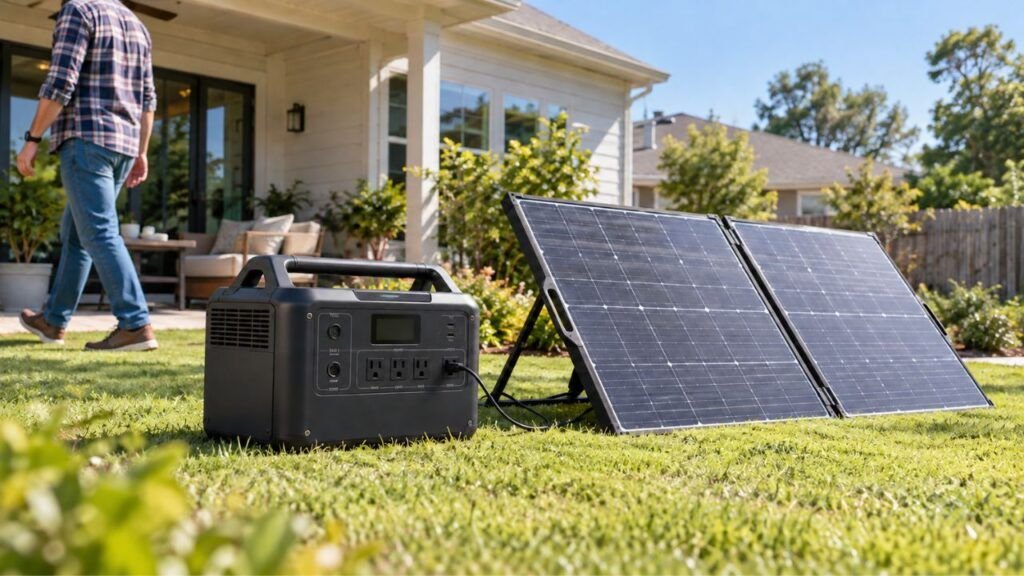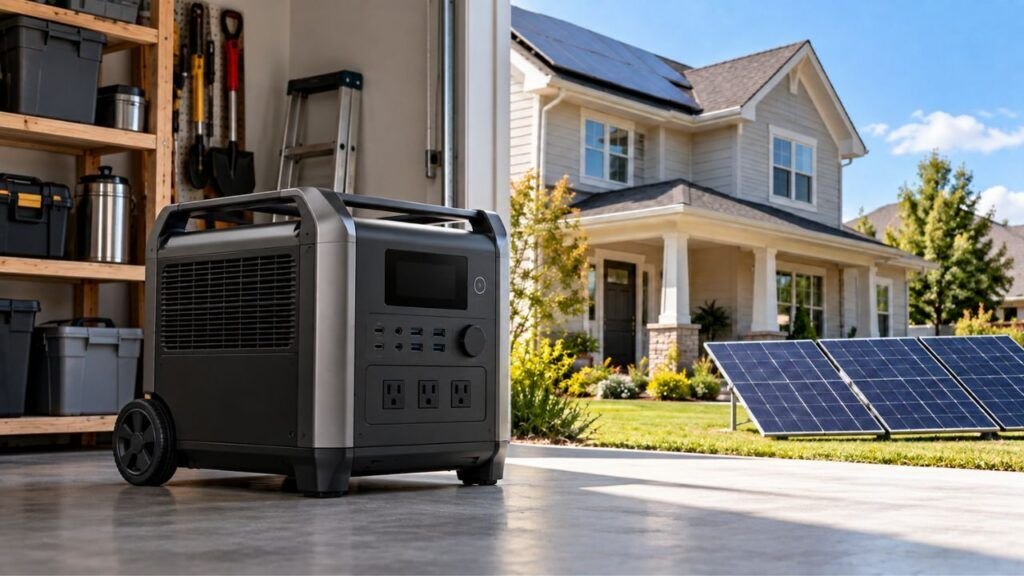
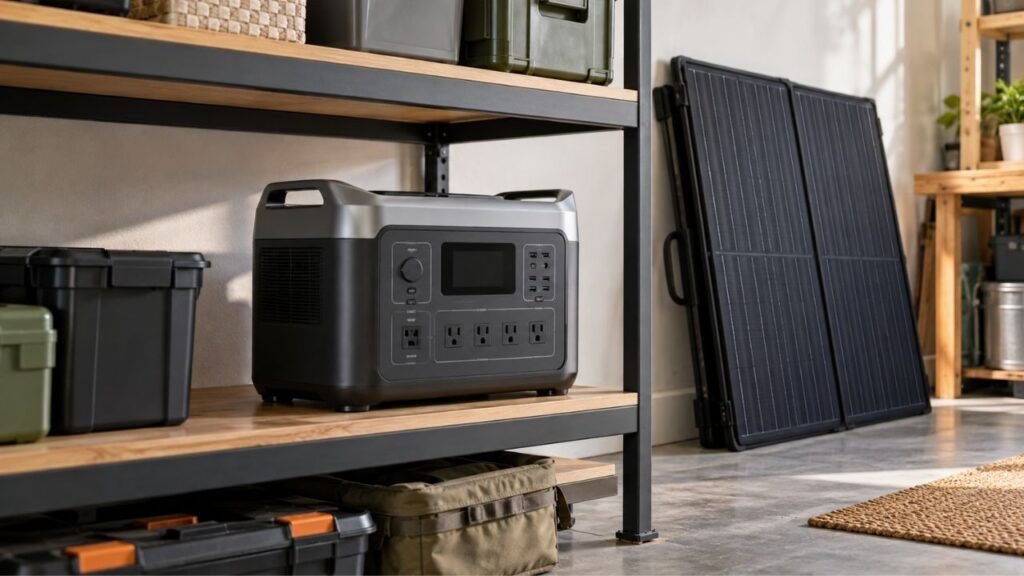
You should store a home solar generator in a cool, dry, well-ventilated indoor location. Keep it protected from direct sunlight, moisture, extreme temperatures, flooding, and nearby heat sources.
A dry utility room, indoor storage area, or temperature-controlled garage usually works well. Below, I’ll help you choose the right location and explain how to protect the battery during short-term and long-term storage.
Key Takeaways
- Store your solar generator somewhere cool, dry, and protected.
- A climate-controlled garage can be a good storage location.
- Basements work when humidity and flooding are not concerns.
- Avoid hot sheds, attics, vehicles, and exposed outdoor areas.
- Keep cooling vents clear and avoid tightly enclosed spaces.
- Keep the unit away from heaters and combustible materials.
- Long-term battery charge recommendations vary between manufacturers.
- Check your generator’s manual before storing it for several months.
What Is the Best Place to Store a Home Solar Generator?
For most portable solar generators, an indoor temperature-stable space is the safest choice. I would choose somewhere that stays dry throughout the year and does not experience dramatic temperature swings.
A utility room, storage room, or conditioned garage can work very well. These areas usually provide better protection from rain, sunlight, freezing temperatures, and excessive summer heat.
Accessibility also matters during home backup emergencies. You do not want your solar generator buried behind furniture or dozens of storage boxes when the power suddenly goes out.
Keep enough open space around the generator for airflow. Never cover cooling vents with clothing, cardboard, blankets, or other stored items.
Most importantly, check your particular generator’s manual. Battery temperature limits and long-term storage recommendations can differ significantly between models.
Best and Worst Places to Store a Solar Generator
Some areas around your home provide much better protection than others. Here is a quick comparison before we examine each location separately.
| Storage Location | Suitable? | Main Concern | Recommended Approach |
| Utility room | Yes | Restricted airflow | Leave vents and fans uncovered |
| Indoor storage room | Yes | Clutter | Keep space around the generator |
| Climate-controlled garage | Yes | Vehicle impact | Place it in a protected area |
| Unconditioned garage | Sometimes | Heat and freezing temperatures | Monitor seasonal temperatures |
| Dry basement | Usually | Humidity and flooding | Keep the generator elevated |
| Closet | Sometimes | Limited ventilation | Avoid overcrowding the space |
| Shed | Usually not ideal | Extreme temperatures | Use indoor storage instead |
| Attic | Avoid | Excessive summer heat | Choose a cooler indoor area |
| Vehicle | Avoid long-term | Dangerous temperature buildup | Remove after transportation |
| Outdoors | Usually avoid | Rain and temperature exposure | Store indoors unless specifically rated |
What Conditions Should a Solar Generator Storage Area Have?
The room itself matters less than the conditions inside it. Temperature, moisture, airflow, and nearby hazards determine whether a location works well.
Keep the Temperature Moderate
Lithium batteries do not perform well when repeatedly exposed to extreme temperatures. High temperatures can accelerate battery aging and reduce long-term capacity.
Very cold temperatures can also create problems, particularly while charging.
As a practical rule, normal indoor temperatures are preferable whenever possible. However, there is no single perfect temperature range for every solar generator.
Some manufacturers allow fairly wide storage temperature ranges. Their recommended long-term storage conditions may be much narrower.
Always follow the temperature limits listed for your exact model.
Be particularly careful when bringing a freezing-cold generator indoors. Allow it to reach an acceptable charging temperature before connecting a charger.
Keep It Dry and Away From Water
Water and electrical equipment are never a good combination.
Avoid areas near:
- Leaking plumbing
- Basement sump areas
- Garage puddles
- Exterior doors exposed to rain
- High-humidity spaces
- Flood-prone floors
- Condensation-prone walls
Even if the generator has some weather resistance, I would still choose a dry indoor storage location.
Weather resistance does not automatically mean the unit is suitable for permanent outdoor storage.
Give the Generator Enough Ventilation
Your solar generator does not produce combustion exhaust like a gasoline generator. However, its electronics and inverter can still generate heat during charging and operation.
That means cooling vents need space.
Do not push the generator tightly against walls or surround it with boxes. Avoid covering the vents with fabric or storing heavy objects directly against them.
Follow any clearance instructions provided by the manufacturer.
Protect It From Direct Sunlight and Heat Sources
Keep your solar generator away from areas where heat can build quickly.
Avoid placing it beside:
- Furnaces
- Boilers
- Space heaters
- Fireplaces
- Radiators
- Water heaters
- Hot appliances
- Sun-facing windows
I would also avoid leaving a solar generator inside a parked vehicle for long periods. Vehicle interiors can become extremely hot during summer.
Store It on a Stable, Protected Surface
Place the generator on a strong and stable surface.
Smaller units may fit safely on a sturdy shelf. Large home backup systems may be too heavy for ordinary household shelving.
Always check the weight before lifting or placing the unit somewhere elevated.
In garages and basements, an elevated platform can provide extra protection from minor water intrusion.
Can You Store a Solar Generator in the Garage?
Yes, you can store a solar generator in a garage if conditions remain suitable.
A climate-controlled garage is often one of the better locations. It keeps your generator close to the house while protecting it from outdoor weather.
The problem is that not every garage stays comfortable.
An uninsulated garage in Arizona or Texas can become extremely hot during summer. A detached garage in northern states may drop below freezing during winter.
Those temperature swings can make the garage unsuitable for long-term battery storage.
If you use your garage, place the generator away from vehicle traffic. You do not want it somewhere a car, bicycle, lawn mower, or heavy tool could strike it.
Also keep the generator away from gasoline, paint thinner, propane containers, and other combustible materials.
Check temperatures during both summer and winter. The garage may work perfectly during one season but poorly during another.
Can You Store a Solar Generator in the Basement?
A dry basement can be an excellent solar generator storage location.
Basements often maintain more stable temperatures than garages. That can help protect lithium batteries from extreme summer and winter conditions.
Moisture is the main concern.
If your basement regularly feels damp, consider using another location. High humidity can affect connectors, ports, electronics, and other components over time.
Flooding is an even bigger concern.
Do not store the generator directly beside a sump pit or water heater. Avoid areas where plumbing leaks have occurred before.
I would also keep the generator slightly elevated when basement flooding is possible. A strong platform can offer protection from shallow water.
Can You Store a Solar Generator in a Closet or Utility Room?
Yes, an indoor closet or utility room can work under the right conditions.
The area should remain dry, temperature-stable, and relatively uncluttered. There should also be enough room around the generator for ventilation.
Avoid packing clothes, paper, cardboard, or blankets against the unit.
You should also keep the generator away from furnaces, boilers, heaters, or other equipment producing substantial heat.
Accessibility matters here as well.
You want to reach your home backup system quickly during an outage. Avoid placing it underneath several heavy boxes or behind difficult-to-move furniture.
Should You Store a Solar Generator in a Shed or Outdoors?
I generally would not choose a shed for long-term solar generator storage.
Outdoor sheds can experience huge temperature swings. They may become extremely hot during summer afternoons and freezing cold during winter nights.
Humidity, insects, dust, and condensation can also become problems.
Outdoor storage creates additional exposure to rain, snow, and direct sunlight.
Even if your generator has an IP weather-resistance rating, check exactly what that rating covers. Water resistance does not necessarily mean the battery can remain outdoors permanently.
Unless the manufacturer specifically approves outdoor storage, a protected indoor location is the safer choice.
Should You Store a Solar Generator on the Floor?
You can place many solar generators on a clean and dry floor. However, that does not mean every floor is an ideal storage location.
Garage and basement floors may occasionally collect water.
Elevating the generator several inches can provide useful protection. A sturdy platform or properly rated shelf works better in flood-prone areas.
For very large home backup systems, weight becomes important.
Do not place a heavy generator on lightweight household shelving. Keep it on a stable surface designed to support its full weight.
Also leave enough room around its ventilation openings.
How Much Charge Should a Solar Generator Have During Storage?
The correct storage charge depends on your generator’s battery and manufacturer instructions.
You may see recommendations around 40%, 50%, 60%, or even higher. That does not mean one percentage works perfectly for every generator.
For long-term storage:
- Avoid leaving the battery completely empty.
- Do not assume permanent 100% charge is always ideal.
- Follow the recommended storage state of charge.
- Check battery percentage periodically.
- Recharge when the manufacturer recommends it.
- Turn unused outputs off before storing the unit.
Many lithium batteries gradually self-discharge while sitting unused.
That means putting a nearly empty generator into storage for several months can eventually leave the battery deeply discharged.
For emergency home backup, your priorities may also be different.
If you expect frequent outages, keeping more energy available may matter more than achieving an ideal long-term storage percentage.
Should You Leave a Solar Generator Plugged In During Storage?
Whether you should leave the generator plugged in depends on the model.
Some modern solar generators are designed to remain connected to AC power. Their battery management systems control charging automatically.
Other manufacturers recommend disconnecting the unit and maintaining a specific charge percentage during long storage.
Because of these differences, I would not apply one rule to every generator.
Check the owner’s manual for terms such as storage mode, battery maintenance, standby charging, trickle charging, or long-term storage.
If the manufacturer allows continuous connection, use the approved charger and charging method.
How to Prepare a Solar Generator for Long-Term Storage
A few simple steps can protect both battery health and overall reliability. I recommend doing this whenever you expect the generator to sit unused for several months.
- Inspect the generator for visible damage.
- Clean dust from vents and exterior surfaces.
- Check ports for dirt or moisture.
- Set the recommended storage charge level.
- Turn unnecessary AC and DC outputs off.
- Disconnect accessories when instructed.
- Choose a cool and dry storage location.
- Keep ventilation openings completely clear.
- Protect the unit from falling objects.
- Check its battery periodically during storage.
- Recharge it according to manufacturer instructions.
- Test the unit before severe weather season.
Do not wrap the generator tightly in plastic.
That can trap moisture and interfere with airflow. A clean, dry storage area is usually better.
How Often Should You Check a Stored Solar Generator?
Do not put your solar generator into storage and forget about it for years.
Check it periodically.
Many manufacturers recommend inspections or charging every few months. The exact schedule depends on the battery and generator design.
During each check, look at:
- Battery percentage
- Display warnings
- Error codes
- Charging ports
- Cooling vents
- Cables
- Physical damage
- Moisture
- Battery swelling
Turn the generator on occasionally and confirm that it operates normally.
Before storm or hurricane season, give the entire system a more complete test. That way, you discover problems before an actual outage.
Warning Signs You Should Never Ignore
Lithium battery systems are generally reliable when used correctly. Still, physical changes can indicate a serious problem.
Stop using the generator if you notice:
- Battery swelling
- Case deformation
- Leaking
- Unusual odors
- Excessive heat
- Smoke
- Cracking
- Strange noises
- Persistent battery errors
Move away from the unit if it begins smoking or showing obvious signs of thermal failure. Follow emergency guidance and contact appropriate emergency services when necessary.
Never open the battery enclosure yourself.
High-capacity battery systems contain significant stored energy. Internal repairs should be handled by qualified technicians or the manufacturer.
Where Should You Store the Solar Panels and Accessories?
Your generator may stay inside, while its solar panels have different storage needs. Clean and organize everything before putting the complete system away.
For panels and accessories:
- Let solar panels dry completely.
- Remove dirt before folding portable panels.
- Protect connectors from moisture.
- Coil cables loosely without sharp bends.
- Keep adapters together.
- Avoid placing heavy items on panels.
- Protect panel surfaces from sharp objects.
- Store everything somewhere dry.
Keeping cables and adapters together also saves time during an outage.
You do not want to discover that your solar charging cable is missing when the grid has already gone down.
Does LiFePO4 Change How You Should Store a Solar Generator?
Many newer solar generators use lithium iron phosphate, commonly called LiFePO4 or LFP batteries.
LiFePO4 batteries generally offer excellent cycle life and good thermal stability. That makes them especially attractive for home backup systems.
However, LiFePO4 does not eliminate proper storage requirements.
You should still protect the battery from excessive heat, moisture, direct sunlight, physical damage, and unsuitable charging temperatures.
The same rule applies to long-term charging levels.
Follow the recommendations for your specific generator instead of assuming every LiFePO4 battery should be stored identically.
Portable Solar Generator vs. Installed Home Battery: Storage Rules Are Different
Portable solar generators and permanently installed home batteries are not the same products. That distinction matters when discussing storage and placement.
A portable solar generator can usually be moved around your home. Its manufacturer provides storage, charging, and operating temperature limits.
A permanently installed home battery is different.
Its location may depend on electrical codes, fire requirements, manufacturer installation rules, permitting, and local regulations.
Do not relocate a permanently installed battery system yourself.
If you have a wall-mounted or hardwired energy storage system, consult the installer or a qualified electrician before making placement changes.
Quick Solar Generator Storage Checklist
Before leaving your solar generator in storage, run through this checklist.
- Keep the location dry.
- Avoid extreme heat.
- Avoid freezing conditions when possible.
- Protect the generator from direct sunlight.
- Keep it away from water.
- Keep it away from heat sources.
- Leave cooling vents clear.
- Avoid combustible clutter.
- Use a stable supporting surface.
- Follow the recommended storage charge.
- Turn unnecessary outputs off.
- Store charging cables safely.
- Check the battery periodically.
- Test everything before outage season.
These simple checks can prevent many common storage problems.
Final Words
The best place to store a home solar generator is usually a cool, dry, temperature-stable indoor area. A utility room, indoor storage area, or conditioned garage can all work well.
Garages and basements are not automatically good or bad locations. What really matters is temperature, humidity, flooding risk, ventilation, and physical protection.
I also recommend checking your generator’s manual before long-term storage. Temperature limits, charge percentages, and maintenance schedules can vary between manufacturers.
A little preparation now can help ensure your solar generator works properly when your home actually needs backup power.
Related FAQs
Is It Safe to Store a Solar Generator Inside the House?
Yes, most portable solar generators can be stored inside because they do not contain a running combustion engine. Keep the unit dry, cool, ventilated, and away from heat sources and combustible clutter.
Can I Keep a Solar Generator in My Garage?
Yes, provided the garage remains dry and stays within the generator’s recommended storage temperature range. Extremely hot or freezing garages may be unsuitable for long-term storage.
Can a Solar Generator Be Stored in a Basement?
Yes, a dry basement with stable temperatures can work very well. Avoid flood-prone areas, leaking pipes, standing water, and locations with consistently high humidity.
Can I Leave a Solar Generator Outside?
Outdoor storage is usually not recommended unless the manufacturer specifically permits it. Rain, humidity, direct sunlight, freezing temperatures, and extreme heat can damage the equipment.
What Temperature Should a Solar Generator Be Stored At?
A moderate indoor temperature is generally best, but acceptable ranges vary between models. Always follow the storage temperature listed in your generator’s owner’s manual.
Should I Store My Solar Generator Fully Charged?
Not necessarily. Many manufacturers recommend a partial charge for long-term storage, while emergency backup needs may justify keeping more capacity available. Follow your model’s specific battery guidance.
Can I Leave My Solar Generator Plugged In All the Time?
Some models support continuous AC connection, while others recommend disconnecting during storage. Check your manual before leaving the generator plugged in for several months.
How Often Should I Recharge a Stored Solar Generator?
Many manufacturers recommend checking or recharging stored batteries every few months. However, the correct maintenance interval depends on the specific battery system and manufacturer.
Can I Store a Solar Generator on a Concrete Floor?
You generally can if the floor stays clean and completely dry. In garages or basements with possible water intrusion, placing the generator on a sturdy raised platform provides better protection.
Is a LiFePO4 Solar Generator Safer to Store?
LiFePO4 batteries generally have strong thermal stability and long cycle life. However, they still require protection from extreme temperatures, moisture, physical damage, and unsuitable charging conditions.

Blake Cooper writes practical guides on generators, portable power stations, and home backup systems. He focuses on simplifying power topics and helping homeowners make informed buying decisions.